Commercial Mold Remediation in Carthage, IN
Mold after a water loss in Carthage gets a moisture survey first and a written scope before anything comes apart.
Carthage Water Restoration provides Commercial Mold Remediation across Carthage with IICRC certified technicians, scheduled evaluations, and documentation your insurance carrier expects. Call (765) 508-0821 to set a time.
- Service: Commercial Mold Remediation for Carthage homeowners
- Service area: Carthage, IN and surrounding areas
- Response time: Scheduled inspection, typically next business day or sooner
- Licensed and insured (License #RC21100059)
- Serving Carthage, IN since 2018
Commercial Mold Removal in Carthage
For commercial buildings in Carthage, we'll track down the water feeding mold growth before any material comes out.
Moisture Sources Here
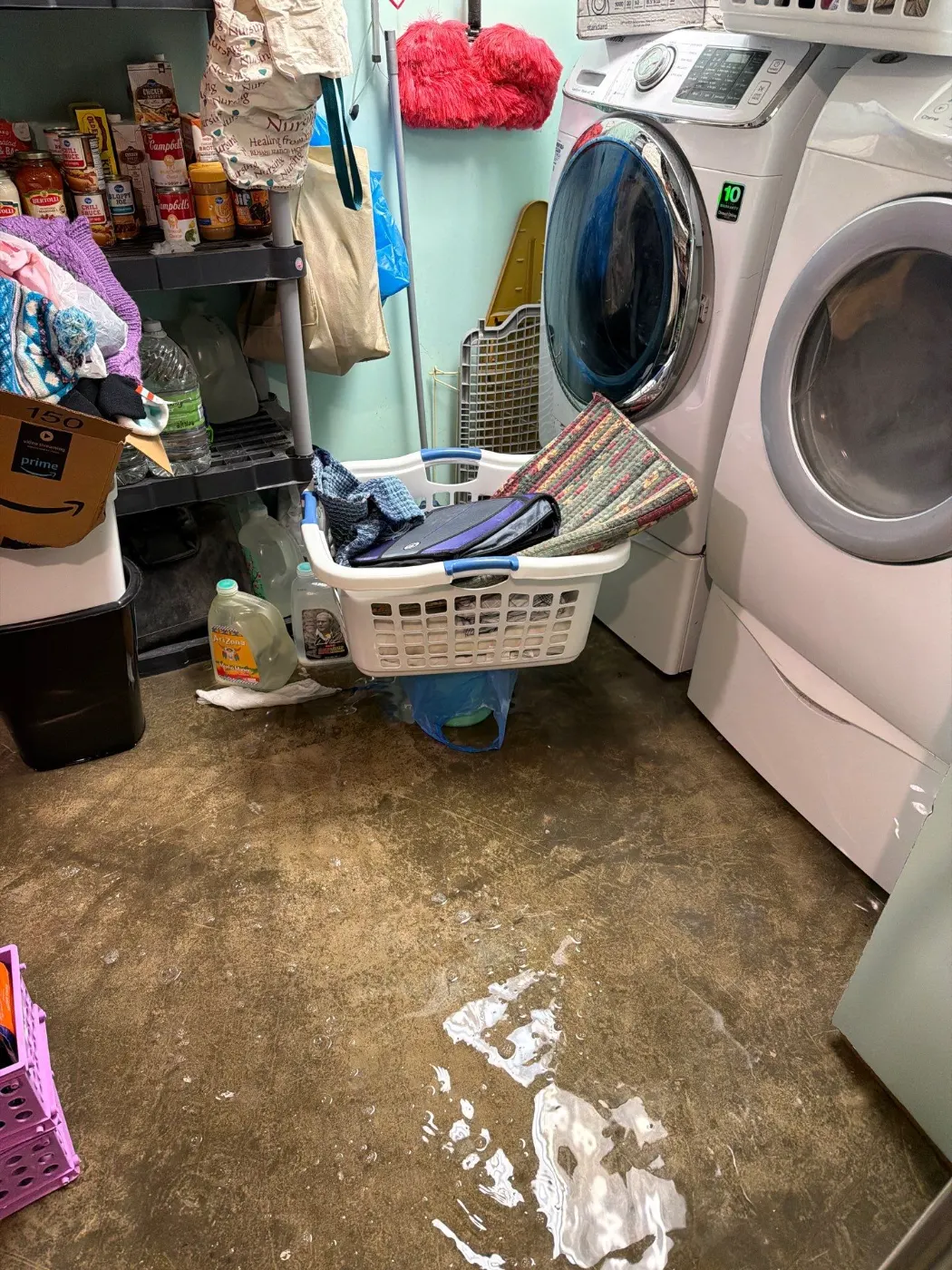
Buildings near the Big Blue River can take on floodwater, and anything left wet afterward can grow mold. We'll go over the air handling and any past leaks on the first walkthrough with whoever runs the building.
We take commercial mold jobs anywhere in Carthage, including the streets around Carthage Elementary School and the Main Street corridor. We also handle commercial mold work in Knightstown, Rushville, Manilla and Glenwood.
Commercial Mold Remediation for Carthage Businesses
Chronic damp in a restroom chase, a janitor's closet or behind a walk in cooler is a maintenance problem until it becomes a tenant problem. Low level moisture over months supports growth that nobody sees until a wall gets opened for something else. Carthage Water Restoration handles commercial mold remediation in Carthage and Rush County with work done to the IICRC S520, moisture documentation and a scope that names which assemblies come out and which ones stay.
Moisture readings only mean something next to a reference. Carthage Water Restoration measures unaffected material of the same type in your Carthage building first, such as a dry sheet of gypsum board in a clean suite, and then compares each suspect assembly against it. The same baseline tells the crew when drying is finished.
Scope approval happens in writing before demolition. The Carthage Water Restoration team walks the building owner or property manager through the moisture findings, the proposed containment boundary, the assemblies coming out, the assemblies being cleaned in place, and the source correction that has to happen for the work to hold. Nothing gets opened past the approved scope without a conversation, and if the crew finds more growth than the survey predicted, that triggers a revised scope.
Photographs taken before anything gets touched are among the most useful in a claim file. Take wide shots of each room, close ups of the staining with something in the frame for scale, the back of any lifted ceiling tile and the suspected source, all with date stamps on. Carthage Water Restoration adds its own photographs once the crew is working in Carthage, and your set shows the condition as found.
If the growth is above the ceiling grid, somebody has to get up there under containment before anything else happens. Call Carthage Water Restoration to schedule the work in Carthage, IN. Crews open the plenum without pushing particulate into the occupied space below, and the findings come back with readings attached.
Signs You Need Commercial Mold Remediation
If you notice any of these in your Carthage building, schedule a free inspection before the issue worsens.
A leak behind a refrigerated case or ice machine that discolored the wall base
Lower level carpet or drywall that stayed wet for days after storm water came in at a door
Rust or corrosion along the bottom track of metal studs where a wall has been opened
Spotting around a supply diffuser or discoloration radiating outward across the ceiling tile
Patched drywall with a stain halo that keeps widening around the repair
Ceiling tiles bowing in the middle of the span after a week of heavy rain
Dark staining along the caulk line behind a janitor sink or restroom fixture
Visible growth on the paper facing of batt insulation sitting above the ceiling grid
A stain running down an interior column or chase wall where a roof leader passes through
Cabinet bases in a break room that have swollen or delaminated around a sink supply line
How Carthage Water Restoration Handles Commercial Mold Remediation
We follow these steps in order on every Carthage job.
Initial Call and Access Planning
You describe what you're seeing and Carthage Water Restoration asks about the building: occupancy, access rules, who holds the keys and whether anyone has opened the area. That conversation sets up the inspection around your schedule.
Phasing for Occupied Floors
Where part of the floor has to stay open, the work area is divided into zones that move in sequence. Each zone gets its own containment and readings before the barrier shifts to the next section.
Containment Construction
Poly and framing seal the work area off from occupied space, with a decontamination entry built at the access point. Every supply and return register inside the zone gets sealed so the air handling system stops moving air through it. Barriers get inspected before work starts.
Removal Sign-Off Inspection
After removal and before cleaning, the crew lead walks every opened cavity and checks the cut lines against the survey. Photographs and readings document the condition of each cavity at sign off.
HVAC Restart and Filter Change
After containment is down, the building engineer changes the filters on the affected air handler and restarts it with the registers unsealed. Any duct work flagged earlier goes to your HVAC contractor first.
Commercial Mold Remediation in Carthage
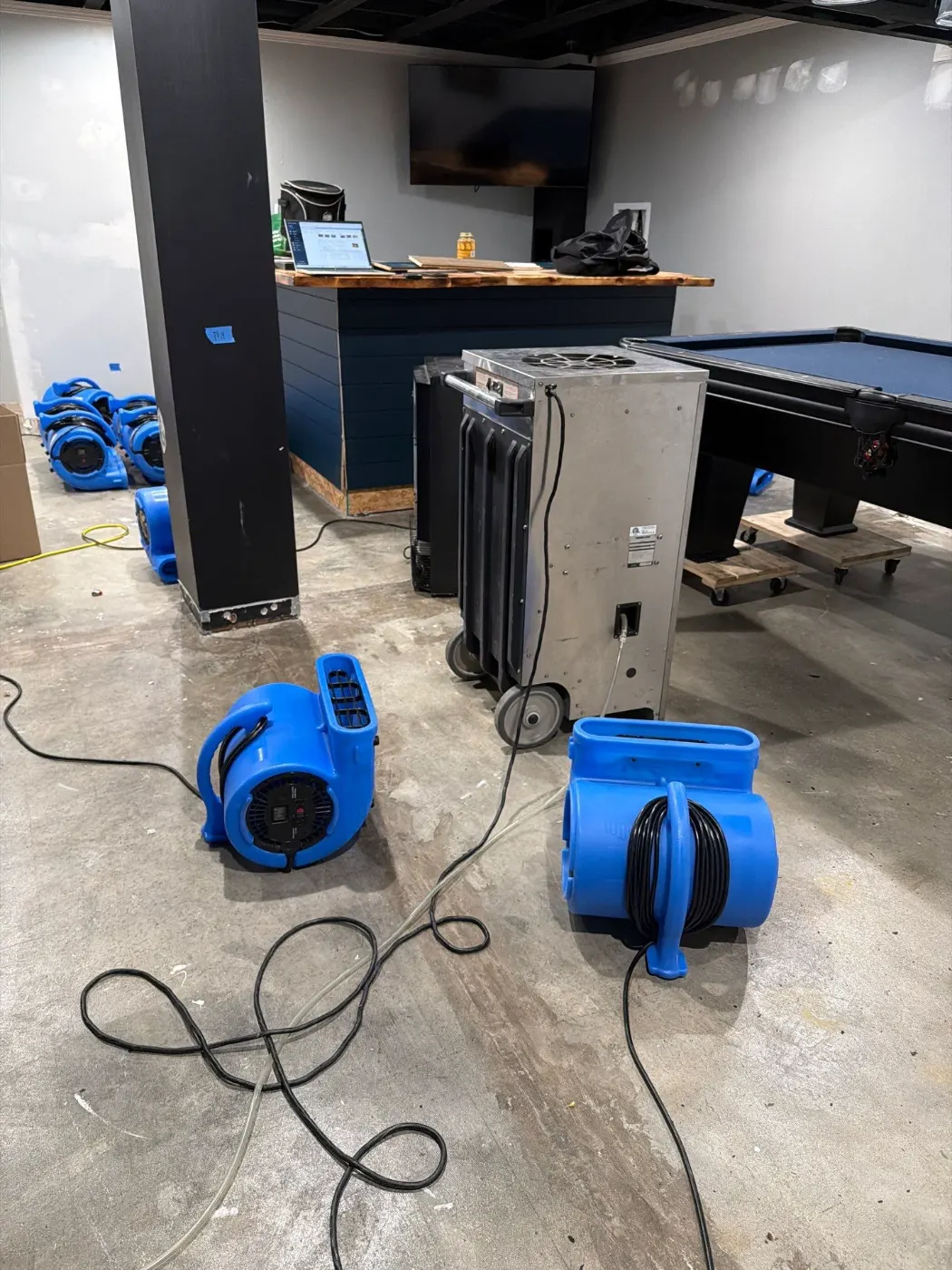
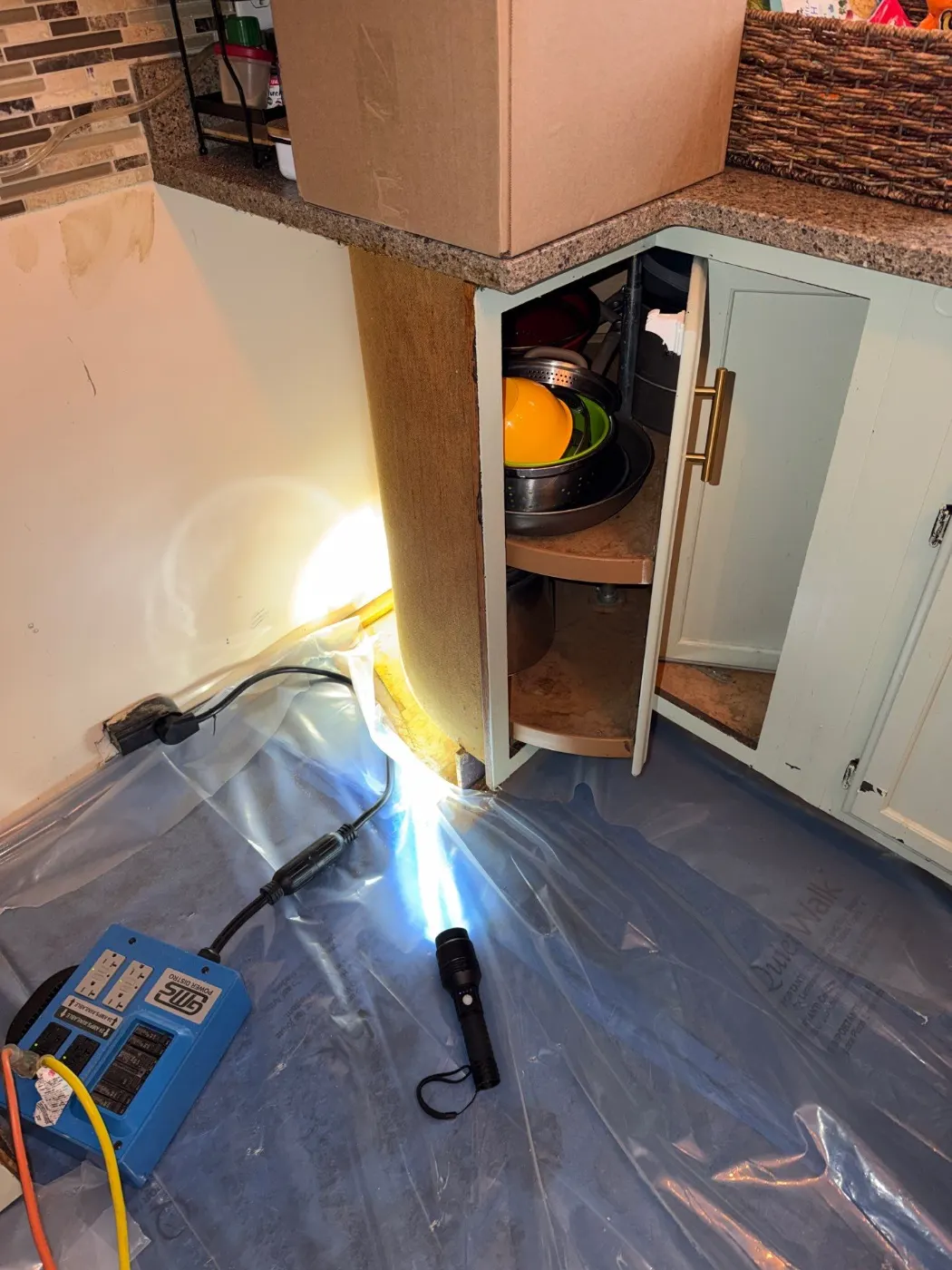
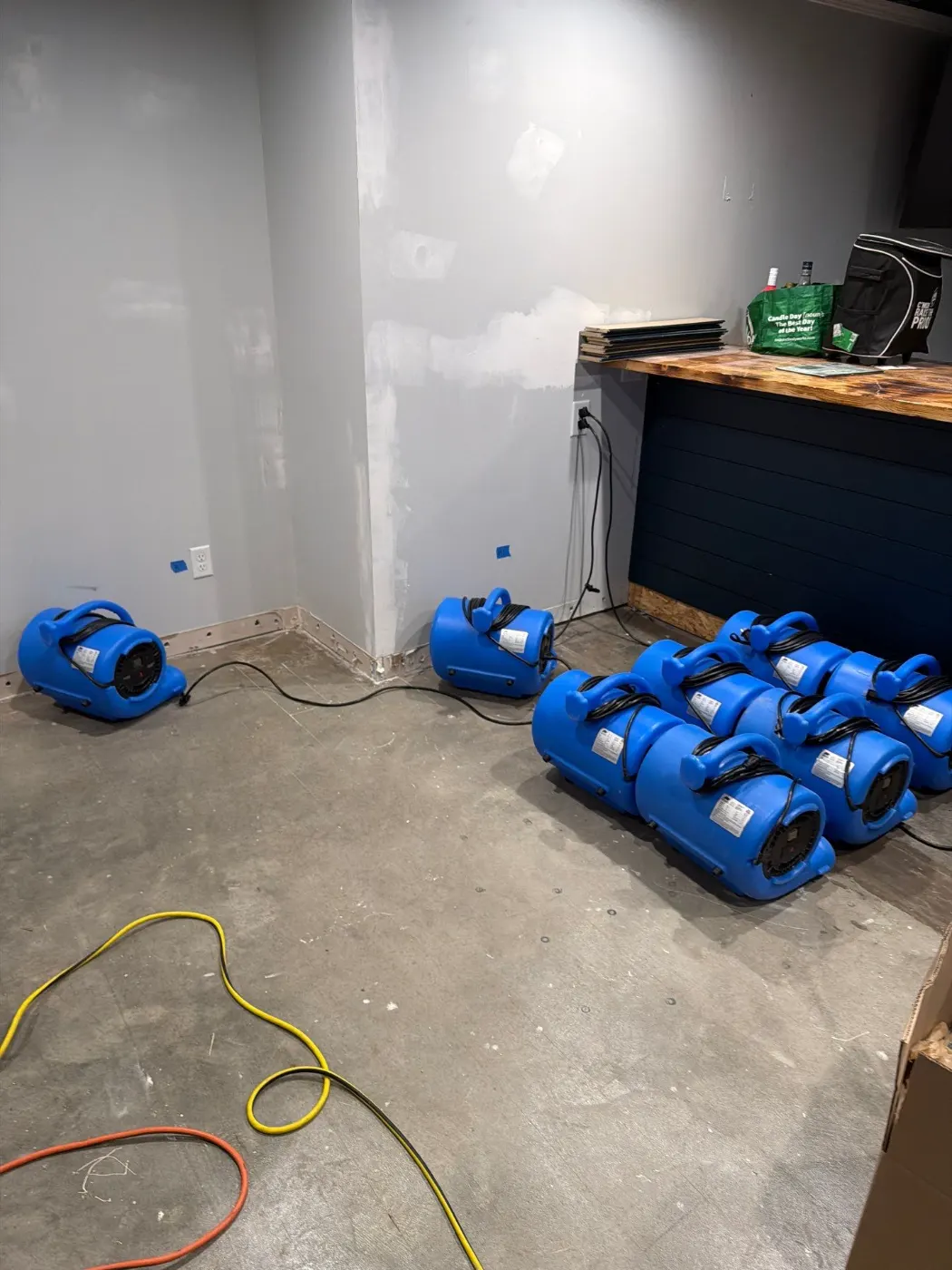
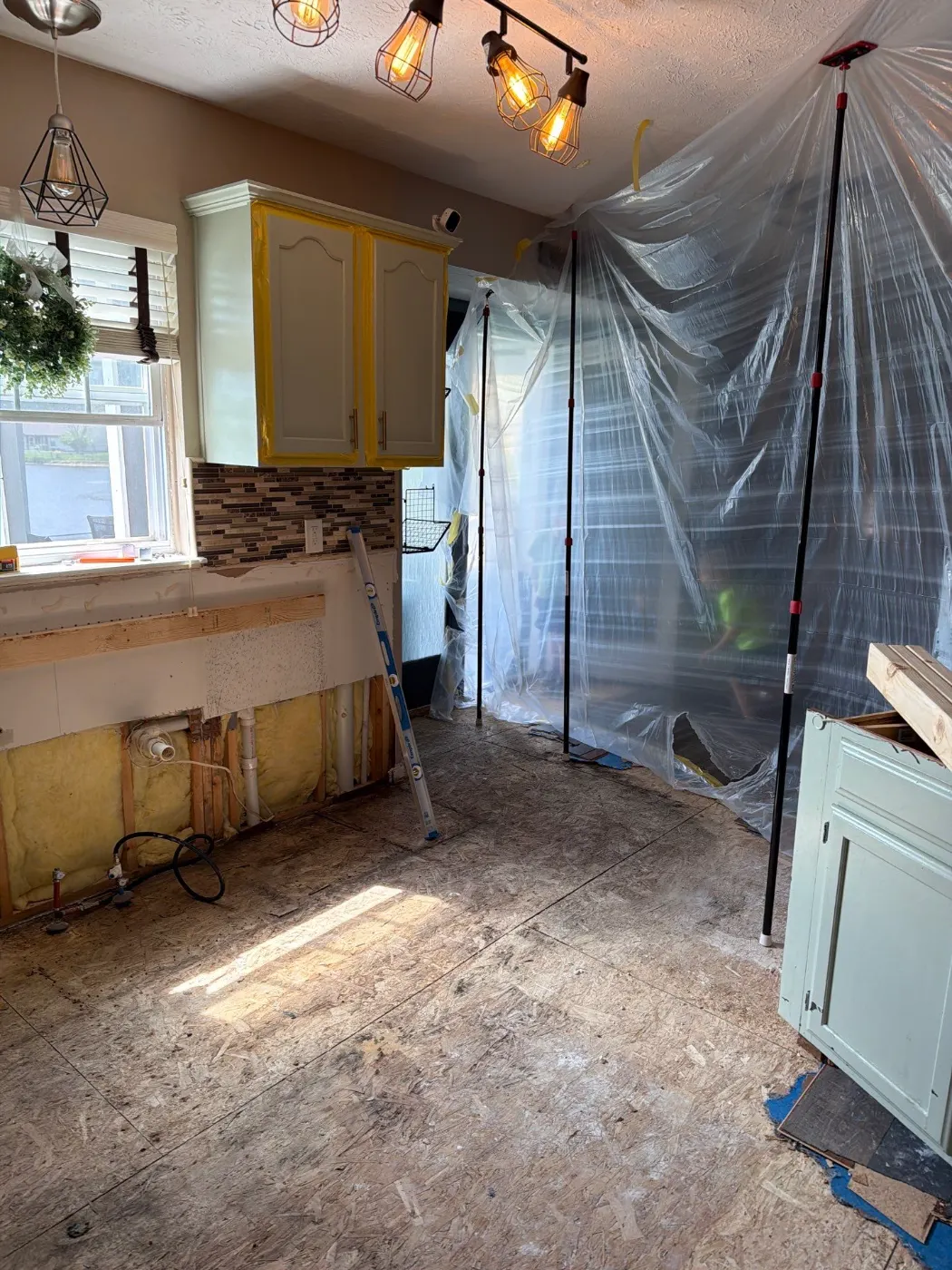
Photographs from real commercial mold remediation jobs completed by our crew in Carthage and surrounding areas.
Commercial Mold Remediation FAQ
Questions Carthage property managers ask us about commercial mold remediation.
Guidance and Standards for Commercial Mold Remediation
- The ANSI/IICRC S520 is the published standard for professional mold remediation. The current edition is the Fourth Edition, 2024. IICRC S520 Standard
- EPA’s mold guide says the key to mold control is moisture control. EPA: A Brief Guide to Mold, Moisture and Your Home
Other Restoration Services in Carthage
Carthage Water Restoration handles the full scope of restoration work. Explore our other services below.
Water Damage Restoration in Carthage
24/7 emergency response. IICRC certified water restoration from extraction to full dry out.
Learn more →Basement Flooding in Carthage
Basement water emergencies handled fast. Extraction, drying, mold prevention.
Learn more →Sewage Cleanup in Carthage
Category 3 biohazard cleanup. Full containment, decontamination, structural restoration.
Learn more →Request Commercial Mold Remediation
Reach Us Directly
Our team is available 24/7 for emergencies and ready to schedule inspections during business hours.
Need Immediate Help?
For active water or mold emergencies, call us directly. We are available 24/7.