What counts as a real water damage emergency?
If standing water is touching drywall, baseboards, hardwood, cabinetry, or any electrical outlet, you have an emergency. The IICRC S500 standard treats water intrusion as time-sensitive because Category 1 clean water can degrade to Category 2 (gray) within 24 to 48 hours and to Category 3 (black, contaminated) shortly after. Translation: a clean supply line leak you ignore until Monday morning is not a clean leak anymore by Monday morning. Sewage, toilet overflows past the trap, and groundwater intrusion from storms in Carthage are Category 3 from the first minute and require containment.
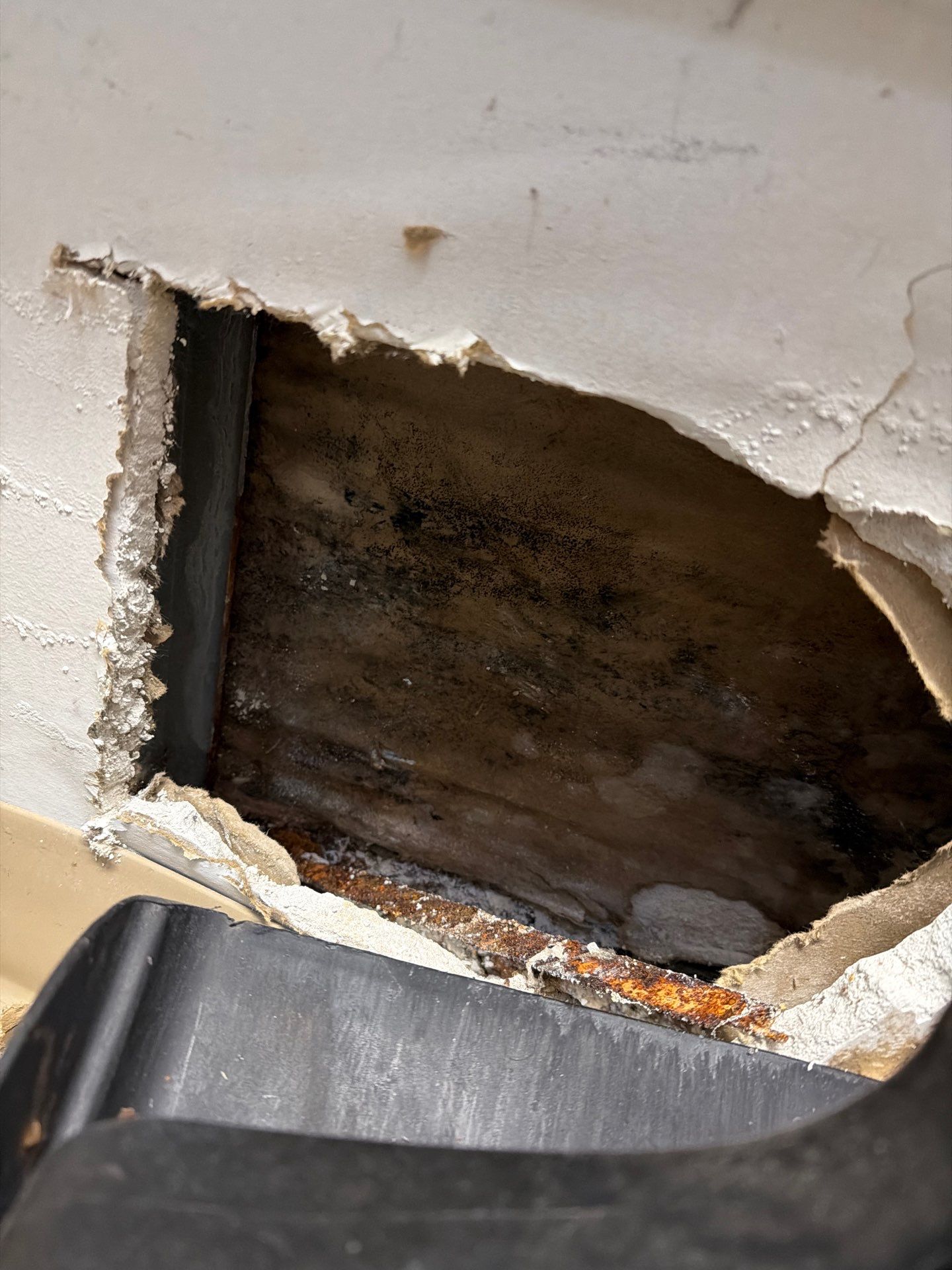
If you smell sewage, see brown water, or the source is unknown, treat it as biohazard until a technician confirms otherwise. Keep pets and kids out of the affected rooms and avoid running HVAC, which spreads contaminants through ductwork. Also watch for hidden emergencies: water wicking up drywall behind a vanity, a slow drip inside a wall cavity, or a ceiling stain that grew overnight. Hidden moisture behind finished surfaces is what fuels mold growth within 48 to 72 hours, and it is the single biggest reason small leaks become five-figure claims.
How fast can a crew actually get to my Carthage property?
Our standard dispatch window for Carthage is 60 to 90 minutes from the first call, day or night. Crews stage from Central Indiana and carry truck-mounted extractors, air movers, dehumidifiers, and moisture meters on every emergency run. If you are calling during a regional event like a hard freeze or a derecho, response can stretch to 2 to 4 hours because the entire metro is calling at once. We will give you an honest ETA on the phone, not a marketing number.
While you wait, shut off the water at the main if the source is plumbing, kill power to affected rooms at the breaker, and move anything valuable to a dry surface. Do not lift soaked rugs alone if they cover hardwood. The weight tears finishes. If it is safe, open windows in cool weather to reduce humidity, but keep them shut in summer when outdoor dew points are higher than indoor air. Pull books, electronics, and leather goods off the floor first because those items lose value fastest when wet.
Will my homeowners insurance cover this?
Most sudden and accidental water losses are covered. Burst pipes, supply line failures, appliance hose ruptures, and ice dam leaks generally qualify. Long-term seepage, lack of maintenance, and groundwater flooding usually do not qualify under a standard policy. Flood from rising surface water requires a separate NFIP or private flood policy.
Document everything before cleanup begins. Photos of the source, the standing water, and every affected room create the evidence chain adjusters expect. Save damaged items in a garage or shed until the adjuster approves disposal. Carthage Water Restoration provides itemized scopes, moisture mapping, and daily drying logs that match Xactimate line items, which is the software 90 percent of carriers use to settle claims. If your adjuster pushes back on scope, ask for the denial in writing and request a reinspection. Most partial denials get resolved once the carrier sees the moisture readings and photos side by side.
What about basements, the most common Carthage loss?
Carthage sits on clay-heavy soil that pushes water toward foundations during heavy rain. Sump pump failures, weeping walls, and floor drain backups are weekly calls for us. If you are dealing with a flooded lower level right now, our basement flooding response page outlines the exact steps we take from arrival to final moisture clearance. After mitigation, ask your plumber about a battery backup sump pump and a backwater valve on the main sewer line. Both upgrades pay for themselves the first time the grid goes down in a storm.
Do I need to leave my home during restoration?
Usually no. For Category 1 losses contained to one or two rooms, most Carthage families stay home. Equipment is loud (think of a window AC running constantly) but safe. For Category 3 losses, sewage backups, or jobs with heavy demolition, temporary lodging is often the right call. Loss of use coverage on your policy reimburses hotel and meals during displacement. We will tell you on the first walkthrough which category you are in so you can plan the next 72 hours. Save every hotel receipt, pet boarding invoice, and restaurant tab, because carriers reimburse documented expenses but not estimates.
How do I know a restoration company is legitimate?
Ask for the IICRC certification number, the BBB rating, and proof of liability insurance before anyone touches your property. Verify the truck is marked, the techs are uniformed, and the estimate is written. If a contractor knocks on your door after a storm offering cash discounts for immediate signing, close the door. Storm chasers leave town when the work gets hard, and your claim gets denied because the scope was never documented properly. Carthage Water Restoration carries the certifications, the insurance, and the local references to back every emergency call in Carthage.
What does 24/7 emergency water damage restoration actually cost?
For a typical single-room loss in Carthage, expect water extraction and three to four days of structural drying to land between $1,500 and $4,500. A finished basement with carpet, pad, and drywall damage usually runs $3,500 to $9,000. Whole-home losses, sewage events, or jobs requiring controlled demolition can range from $10,000 to $25,000 or more. These numbers are not pulled from thin air, they are based on what we actually bill in Central Indiana week to week. For a deeper breakdown by category and material, our complete price breakdown guide walks through line items the way an adjuster reads them.
If your loss is covered, your out-of-pocket is typically just your deductible. We bill the carrier directly in most cases. After-hours emergency response itself does not carry a separate premium with Carthage Water Restoration, because Xactimate already prices emergency service calls into the standard mitigation scope. Be cautious of companies that quote a flat "emergency fee" of $500 to $1,000 on top of the work. That charge rarely survives an adjuster review and usually ends up on your bill, not theirs.
What is the actual drying process and how long does it take?
Step one is extraction. Truck-mounted units pull standing water out fast, often in a few hours. Step two is controlled demolition, which means removing materials that cannot be dried in place: wet insulation, swollen MDF, delaminated laminate flooring, and saturated drywall below the flood line. Step three is structural drying with air movers and commercial dehumidifiers running 24/7. Step four is daily monitoring with moisture meters until materials hit dry standard, typically within 4 percent of an unaffected reference area.
Most residential jobs in Carthage dry in 3 to 5 days. Dense materials like hardwood subfloor or concrete can take 7 to 10. We do not pull equipment early to save fuel costs, and we document readings every visit. If you have a burst pipe situation, the drying clock starts the moment the water stops flowing.