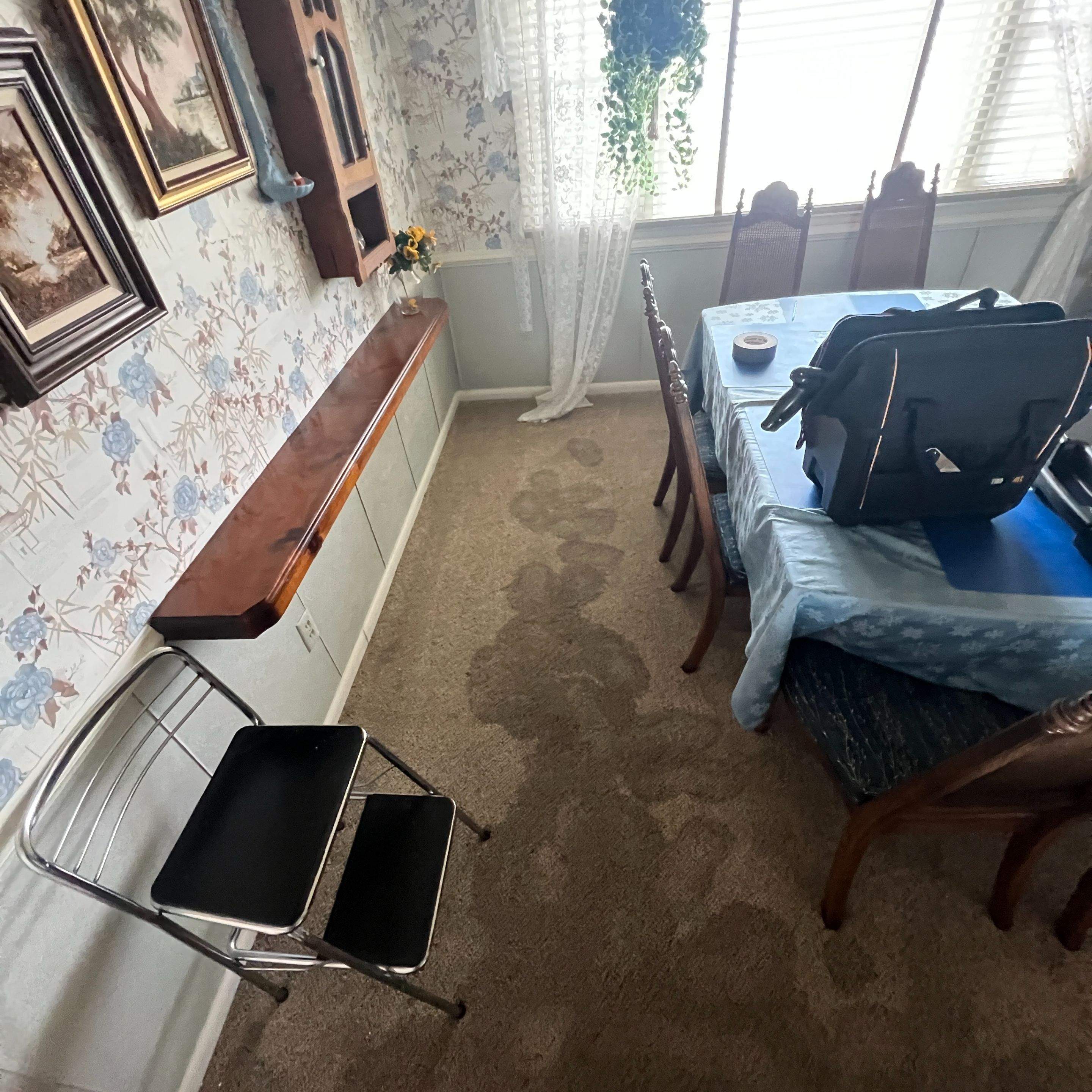
What should you do in the first ten minutes?
Shut off the dishwasher at the breaker, not just the cycle button. A failed control board can keep pumping even after you press cancel. Then close the hot water shutoff valve under the sink. That single quarter turn valve feeds the dishwasher in most Carthage homes, and closing it stops the supply line from contributing more water while you work. Pull towels across the floor to soak surface water, lift any rugs or floor mats, and move cardboard boxes or paper goods out of the under sink cabinet. Do not run the dishwasher again to drain it. If standing water remains inside the tub, bail it out with a cup and sponge the rest.
While you are working, also open the cabinet doors on either side of the dishwasher and pull out anything stored at floor level. Cleaning supplies, pet food bags, and small appliances absorb water quickly and can wick moisture deeper into the cabinet box if left in place. If the leak reached a basement or crawl space below, head down and check the ceiling drywall, insulation, and any electronics or boxes stored under the kitchen footprint. Catching a drip in the basement early can save a whole ceiling replacement later.
How do you tell where the water actually came from?
The source determines how dirty the water is and how aggressive the cleanup needs to be. A burst supply line leaks clean pressurized water, which spreads fast but starts as Category 1. A leaking door gasket releases warm wash water with food particles and detergent, which is Category 2 grey water. A backed up drain hose pushes dirty water from the disposal back into the cabinet, and that is closer to Category 2 or 3 depending on what was in the sink. We cover the differences in detail in our guide to water damage categories, and the category drives whether your flooring and cabinet bases can be dried in place or must come out.
To narrow the source quickly, look first at the supply line connection on the left side of the unit, then check the drain hose loop under the sink, and finally inspect the door gasket for swelling or cracks. A puddle that appears only after a wash cycle points to the gasket or the pump seal. A puddle that grows even when the dishwasher is off points to the supply line or the inlet valve. A foul odor with the water points to the drain side.
Will your insurance cover it?
Sudden and accidental discharge from a dishwasher is covered under most homeowner policies in Indiana. Gradual leaks that have been seeping for months are usually not. Photograph the appliance, the supply line, and the visible damage before anything is moved. Save the failed part if your plumber replaces a hose or valve. The adjuster will ask. We provide documentation packages that match insurer expectations, and we are happy to walk you through the claim process if this is your first one.
Keep a simple log of what you did and when you did it. Note the time you first saw water, the time you shut off the breaker and the supply valve, and the time you called Carthage Water Restoration. Adjusters look for mitigation steps taken promptly, and policies often require the homeowner to prevent further damage as a condition of coverage. A short timeline written the same day carries more weight than a reconstruction from memory two weeks later.
When should you call a professional instead of drying it yourself?
Call if water has reached the cabinet bases, traveled past the dishwasher footprint, or dripped into a basement or crawl space below. Call if the leak was warm wash water with detergent, because surfactants slow evaporation and feed microbial growth. Call if you cannot see where the water stopped. Surface drying with a box fan handles a contained spill on tile, not a flood that wicked into MDF cabinet sides overnight.
Carthage Water Restoration dispatches a crew to Carthage addresses within 2 hours in most cases, and the first visit includes moisture mapping, a written scope, and a direct conversation about whether your situation actually needs professional drying or can be handled with towels and time. Not every spill needs equipment, and we will tell you when it does not.
What does the damage usually cost to address?
Costs in Carthage vary with how long the leak ran and what flooring you have. A contained spill caught within 2 hours and limited to the dishwasher footprint usually falls in the $600 to $1,200 range for surface drying with no removals. Once the cabinet base and the surrounding flooring need to be dried as an assembly, the job typically runs $1,400 to $2,800. If the subfloor underlayment has swelled or delaminated and a replacement zone is needed, expect $2,500 to $5,000. The largest jobs, where cabinets, flooring, and a basement ceiling all need attention, generally fall between $4,500 and $8,000. These ranges reflect typical Central Indiana labor, materials, and equipment rental costs, not worst case scenarios.
Two factors push a job toward the high end of any range. The first is hardwood flooring that runs continuously into adjacent rooms, because the drying zone expands well beyond the kitchen. The second is a slow leak that ran for weeks before discovery, because microbial growth on the back of the cabinet panels often requires controlled removal rather than in place drying.
How do you prevent the next one?
Three habits prevent most repeat floods. Replace the rubber supply line with a stainless braided line every five to seven years. Pull the dishwasher out and inspect the floor under it every time you replace the unit, which is usually every eight to twelve years. Clean the filter at the bottom of the tub monthly so debris does not back into the drain hose. A leak sensor under the toe kick costs about twenty dollars and will alarm before water reaches your cabinets.
A few additional habits help. Run the dishwasher only when someone is home and awake, not overnight or while the house is empty for the weekend. Check the high loop on the drain hose under the sink once a year to confirm it still rises above the disposal inlet, because a hose that has sagged invites backflow. If your dishwasher is more than ten years old and you have noticed dishes coming out dirtier than before, the pump seal may be wearing. That is often the warning sign before a real leak begins.
How long will the drying actually take?
Plan for three to five days of air movers and dehumidifiers in most kitchen dishwasher jobs. If hardwood is involved, drying may stretch to seven days because we lower the moisture content slowly to avoid cupping. We monitor daily and pull equipment when readings match the dry standard for unaffected materials in the same room. Faster is not better with wood floors. If a crew tells you they can finish a hardwood dry in 48 hours, get a second opinion.
Is the floor under the dishwasher actually wet?
Almost always, yes. The dishwasher sits in a recessed bay between cabinets, and the floor under it is usually the original subfloor with a thin underlayment. Water pools there with nowhere to evaporate because the appliance blocks airflow. We use pinless moisture meters along the toe kick and thermal cameras to map the wet footprint without pulling the unit on the first visit. In about seven out of ten dishwasher floods we see, moisture has already reached the cabinet sides and the wall plate behind the unit. For more on how we map hidden moisture, see our notes on moisture mapping with thermal imaging.